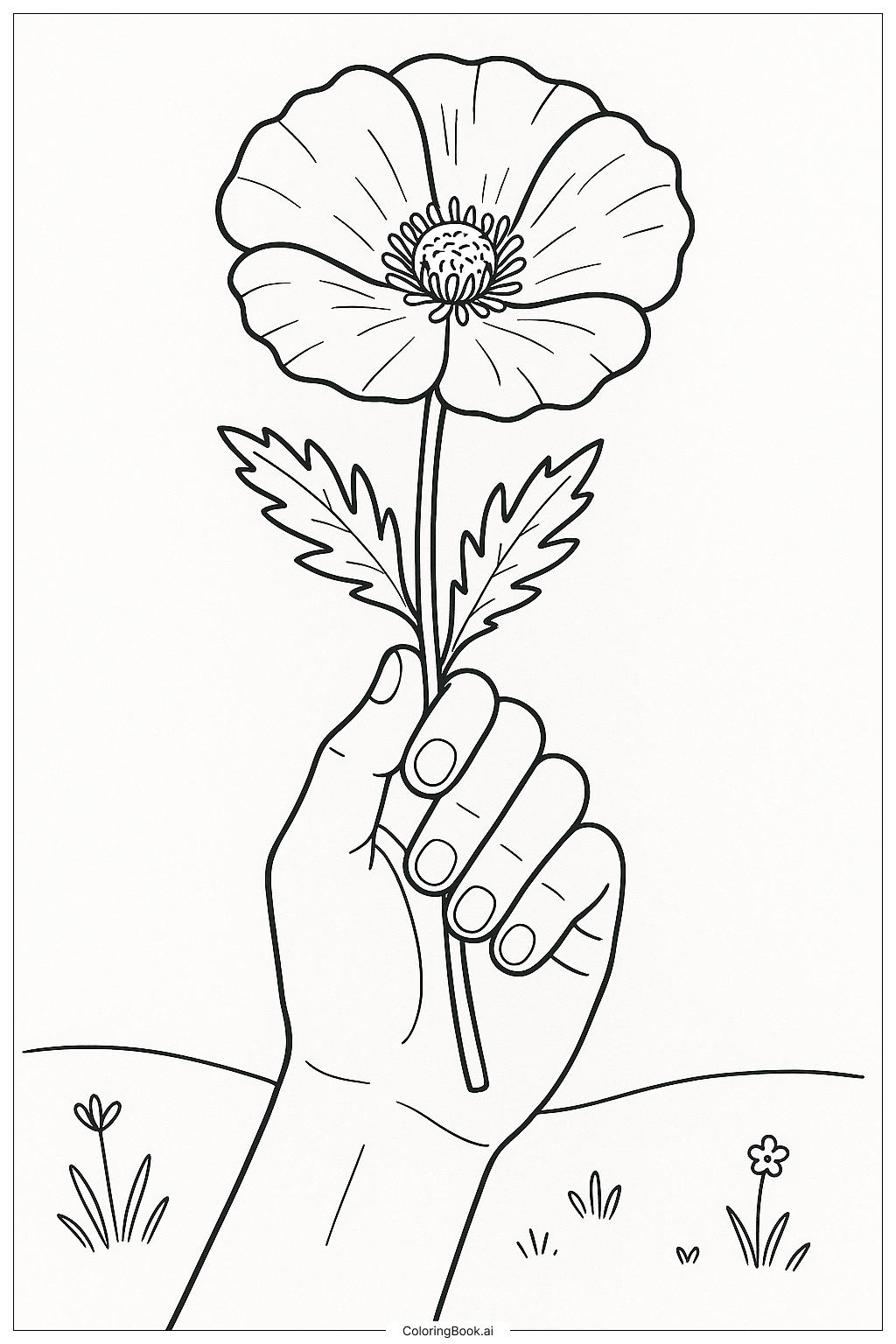
Coloring tips: How to color Hand Holding A Single Poppy Flower coloring page well?
Start with the flower petals. Poppies are famously red, but you can also try orange, pink, or deep purple for a creative look. Use a lighter shade at the petal edges and a darker tone closer to the center to add depth.
For the center seed pod, use a dark green or olive tone. Add small dots or short strokes around it to show the stamens. A touch of yellow or cream on the tips looks great.
Color the stem and leaves in fresh, bright green. Use a slightly darker green along the edges of the leaves to give them shape and volume.
For the hand, choose a natural skin tone. You can use peach, tan, brown, or any shade that feels right. Add a gentle rosy tint to the knuckles and fingertips to make the hand look warm and lifelike.
Take your time with each section. Coloring slowly and carefully will make the final result look beautiful and detailed.
Coloring challenges: Which parts are difficult to color and need attention for Hand Holding A Single Poppy Flower coloring page?
• Petal Shape and Shading: The poppy petals are wide and rounded, which means you need to blend colors smoothly across a curved surface. Getting a natural gradient from light at the edges to dark near the center can be tricky, especially for younger colorists. Take your time and use light strokes to build up color gradually.
• Tiny Stamen Details: The center of the poppy has many small stamens clustered around the seed pod. These are very fine and close together, making them hard to color without going outside the lines. Use a sharp pencil or a fine-tipped marker for this area. You can also simply color the whole center area in one dark tone to simplify it.
• Leaf Edges: The poppy leaves have jagged, irregular edges. Staying inside these uneven outlines requires steady hands and good control of your coloring tool. A thin marker or a well-sharpened colored pencil works best here.
• Hand Skin Tones: Coloring a realistic-looking hand means working with multiple skin tone shades. The flat areas of the palm and fingers need a base color, while the knuckles and creases need a slightly darker or warmer tone. Blending these smoothly without making the hand look patchy takes patience and practice.
• Overall Composition Balance: The image includes both organic shapes (flower, leaves) and a detailed human hand. Keeping the colors balanced so that neither the flower nor the hand overpowers the other is a visual challenge that requires thoughtful color choices throughout the entire page.
Benefits of coloring books: Advantages of drawing Hand Holding A Single Poppy Flower coloring page
Coloring this image of a hand holding a single poppy flower offers many wonderful benefits for children and adults alike.
For younger colorists, it helps develop fine motor skills and hand-eye coordination. Carefully staying within the outlines of petals, leaves, and fingers trains the small muscles in the hand, which supports better handwriting and drawing skills over time.
The image also encourages creativity. Choosing colors for the petals, skin tone, and background invites personal expression and builds confidence in making artistic decisions.
Focusing on a calming nature scene like this one can help reduce stress and anxiety. The quiet, gentle subject — a hand cradling a flower — naturally encourages slow, mindful attention, which is great for relaxing after a busy day.
Learning about poppy flowers through coloring can spark curiosity about nature, plants, and the world around us. It connects art with science in a playful, hands-on way.
For older children and adults, the detailed elements like the seed pod and stamen cluster offer a satisfying challenge that builds patience and focus.
Overall, this coloring page is a simple but meaningful activity that nurtures creativity, calm, and connection to the natural world.